The 5 checks for any used appliance
Do these first, whatever you’re buying. They take about two minutes and can end the deal before you waste time on the rest.
- Photograph the model and serial label. You need both numbers for the recall and age checks. Consumer Reports lists this as the first step for any used appliance.
- Check recalls. Run the model number through our appliance recall check, then confirm on CPSC’s recall site and the brand’s own recall page. The recall check page lists the brand pages.
- Work out the age. The serial number usually encodes the build date. Use our brand pages, such as the GE serial number lookup, Whirlpool, LG, Frigidaire or Kenmore guides.
- See it running. Ask the seller to have it plugged in, connected and working before you arrive. An unplugged fridge in a garage can’t show you it cools.
- Check the cord, the rust and the level. Consumer Reports suggests checking for frayed cords, rust, damage and whether the appliance sits level.
Age versus typical lifespan
Age matters as much as condition. A clean appliance near the end of its expected life is a short-term purchase.
| Appliance | Typical life (years) | Range in published sources |
|---|---|---|
| Refrigerator | 12 | 9–13 |
| Washing machine | 10 | 5–15 |
| Dryer | 13 | 10–14 |
| Dishwasher | 10 | 9–15 |
| Range (gas or electric) | 15 | 13–17 |
Basis: our estimate, the median of the figures from Consumer Reports (CR), InterNACHI, NAHB and the US Department of Energy (DOE). Refrigerators use ENERGY STAR in place of DOE; ranges have no CR figure.
Each lifespan page shows every source figure and how we arrived at the typical one: see the refrigerator, washer, dryer and dishwasher pages.
Refrigerator checklist
- Bring an appliance thermometer. FDA says the fridge should be at or below 40°F and the freezer at 0°F. A unit that has been running for hours and can’t reach those numbers has failed the test.
- Do the dollar-bill test on each door. Close the door on a bill. The Department of Energy says that if it pulls out easily, the latch or seal needs work.
- Check the gaskets for mold or tears. Consumer Reports specifically mentions mold inside refrigerator seals.
- Test the ice maker and dispenser. Consumer Reports’ surveys name these as the two most commonly reported refrigerator problem areas.
- Look for water on the floor and behind the unit, and a kinked water line.
- Listen. Knocking or grinding isn’t normal running noise.
- Open every door, drawer and bin and check hinges and handles.
- Measure the fridge and every doorway on the route into your kitchen.
Washer checklist
- Run a short cycle. Watch it fill, wash, drain and spin. A washer that won’t drain or spin is a not-working washer.
- Listen for the lid or door lock click at the start.
- Look for rust inside the drum or tub.
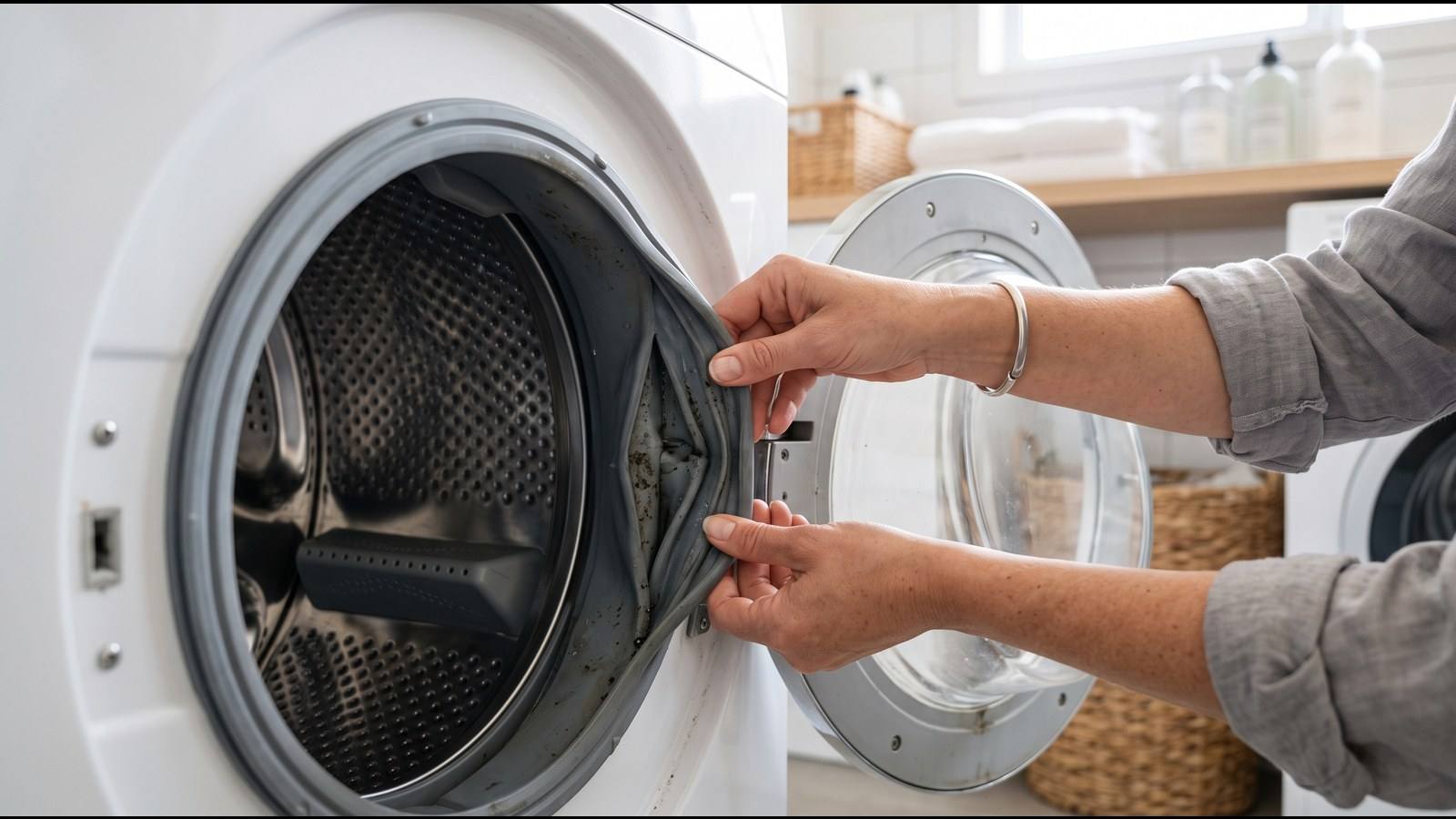
- Check a front-loader’s door gasket for mold, odor and tears. Consumer Reports notes front-loaders can be prone to mold and mildew.
- Inspect the fill hoses. Whirlpool advises inspecting hoses for bulging, cracking and fraying, and GE recommends replacing fill hoses every 5 years. Ask how old they are.
- Watch the spin for heavy shaking or walking.
- Check for water under the machine after the test.
Dryer checklist
- Pull out the lint filter. USFA says never to run a dryer without one. It should be intact.
- Ask about lint and venting. The U.S. Fire Administration reports that failure to clean was the leading factor in home dryer fires (31% in 2018–2020 data). CPSC advises venting with rigid or semi-rigid metal duct, not plastic or foil accordion duct.
- Run it on heat for a few minutes. The drum should turn and the air should get warm.
- Stop if you smell burning.
- Ask whether loads were taking longer to dry. CPSC says that can mean a blocked lint screen or duct.
- Match the hookup. Consumer Reports notes electric dryers need a 240-volt outlet and gas dryers need a gas line plus a 120-volt outlet.
Dishwasher checklist
- Ask for a short cycle if it’s still installed, and watch it fill and drain.
- Check for standing water in the bottom afterward. Whirlpool says this often points to a blockage or a failing component.
- Pull out the filter and check it’s present and not packed with debris.
- Spin the spray arms by hand.
- Look for cracks, rust spots and rusty rack tines in the tub.
- Check the cabinet and floor around it for water stains or swollen wood.
- Have a qualified installer disconnect it. Don’t let anyone pull it out on the spot. It’s connected to water, a drain and power.
Range checklist
- Turn on every burner or element, then heat the oven for 10 minutes.
- Look for cracks in a glass cooktop. GE does not recommend using a cracked glass cooktop until it’s repaired, and on a range it advises against using the oven too.
- Check the knobs are all there and click firmly to OFF.
- Ask for the anti-tip bracket. CPSC says a range should be secured to the wall or floor with one, and that you should install one if it’s missing.
- Confirm the fuel type. Check whether it’s gas or electric, and for gas whether it’s set up for natural gas or propane. Hookups and conversions are work for a qualified technician.
Questions to ask the seller
- Why are you selling it?
- How old is it, and do you have the receipt or manual?
- Has it ever been repaired? What was replaced, and do you have the invoice?
- Has it had any recall work done?
- Was it used daily, or was it a spare in a garage or basement?
- For a washer: how old are the hoses? For a dryer: when was the vent last cleaned?
- Can I see it running when I arrive?
Red flags: walk away
| Red flag | Why | Basis |
|---|---|---|
| Gas smell | Leave, then call 911 and the gas utility from outside | official (PA PUC) |
| Open recall, not repaired | Illegal to sell unless repaired under the recall | official (CPSC) |
| Fridge above 40°F after running for hours | Fails FDA food-safety limit | official (FDA) |
| Burning smell or scorch marks on a dryer | Overheating dryers can cause fires | official (CPSC) |
| Cracked glass cooktop | GE says don’t use it until repaired | manufacturer (GE) |
| Water under a washer or standing water in a dishwasher | Active leak or drain fault | manufacturer (Whirlpool) |
| Frayed or damaged power cord | Listed as a check by Consumer Reports | industry guide |
| Seller won’t let you see it running | You can’t verify it works | our advice |
Payment and pickup basics
- Bring help and a dolly, and measure your vehicle. Appliances are heavy.
- Pay once it passes your checks. OfferUp’s guidance for in-person sales is that cash is the safest method, app payments carry some risk, and you should never use checks, gift cards, wire transfers or crypto.
- Don’t pay a deposit for an appliance you haven’t seen running.
- Plan installation. USFA recommends professional installation and service for dryers. Gas and hard-wired electrical connections are always a job for a licensed technician.
- Budget beyond the price. Consumer Reports puts delivery at $25–$200, and installation at $105–$125 for ranges and $50–$175 for washers.
Limitations
A 10-minute test at a seller’s home can’t show intermittent faults, a compressor near failure or a slow leak. That’s why Consumer Reports suggests used-appliance stores, which typically give 6 weeks to 6 months of warranty, over private sellers. If you do buy privately, the checks above reduce the risk but don’t remove it.
What to do next
- Check what it’s worth before you negotiate: how much is my used appliance worth, or see used washer prices and used refrigerator prices.
- Run the model number through the appliance recall check.
- Find the age: how old is my refrigerator.
Checked against the sources below on 26 September 2026.