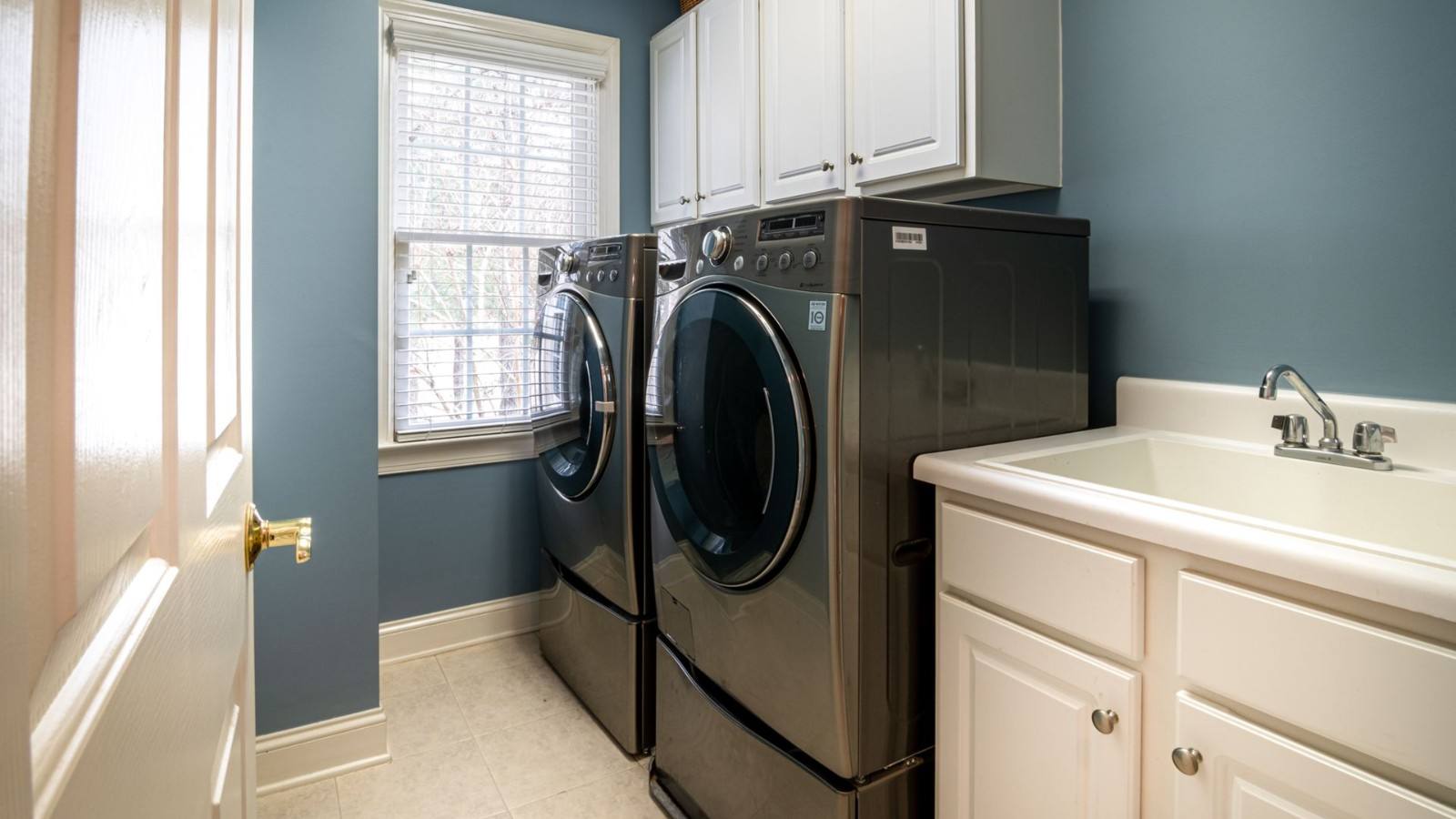
Dryer lifespan by source
| Source | Lifespan | What it’s based on | Basis |
|---|---|---|---|
| NAHB / Bank of America study (2007) | 13 years (gas and electric listed separately, both 13) | 2006 telephone survey of manufacturers, trade associations and researchers | industry study (NAHB) |
| InterNACHI life expectancy chart | 13 years | Home inspectors’ chart, assuming regular recommended maintenance and normal wear | industry study (InterNACHI) |
| US Department of Energy (2024 rule) | 14 years average | Lifetime estimate used in DOE’s clothes dryer standards analysis | official (US DOE) |
| Consumer Reports | “A decade or so” | CR’s repair-or-replace analysis | industry study (Consumer Reports) |
| Range used by the checker above | 10 low / 13 typical / 14 high | Low is CR’s “decade or so”; high is DOE’s 14; typical is the median of the four figures (10, 13, 13, 14) | our estimate |
Dryers are among the more durable appliances. Consumer Reports calls them “relatively simple machines” with fewer parts than washers. It also reports that 90 percent of all dryers purchased from 2015 to 2025 were still in use.
Dryer fire safety: the facts that matter
For fire risk, cleaning matters as much as age. The U.S. Fire Administration’s report on residential dryer fires (2008 to 2010 data) found:
| Finding | Figure |
|---|---|
| Clothes dryer fires in residential buildings each year | About 2,900 |
| Deaths / injuries each year | About 5 / 100 |
| Property loss each year | About $35 million |
| Leading factor contributing to ignition | Failure to clean (34% in 2008–2010; 31% in 2018–2020) |
| Peak month | January (11% of fires) |
Basis: official, U.S. Fire Administration.
The same report found dryer fires were more common in fall and winter.
What the USFA and NFPA advise:
- Clean the lint filter before or after each use, and never run the dryer without one.
- Clean lint out of the vent pipe once a year, or more often if clothes take longer than normal to dry (NFPA).
- Use rigid or flexible metal venting to keep air flowing properly (NFPA).
- Check that the vent behind the dryer isn’t damaged, crushed or restricted, and that the outdoor vent cover opens when the dryer runs (USFA).
- Have the dryer installed and serviced by a professional. The NFPA adds that gas dryers should be inspected by a professional.
- Don’t leave a dryer running when you leave home or go to bed (NFPA).
The InterNACHI chart gives a separate lifespan for the vent itself: about 5 years for plastic dryer vent and 20 years for steel.
Gas dryers: never connect, move or repair a gas dryer yourself. Hire a qualified, licensed technician.
What shortens or extends a dryer’s life
The NAHB study notes that the life of home components “is greatly affected by the quality of maintenance.” For dryers, the verified advice is mostly about airflow:
- Clean the lint filter every load. ENERGY STAR says this improves air circulation and the dryer’s efficiency.
- Watch for dryer-sheet film. ENERGY STAR notes that dryer sheets can leave a film on the filter that reduces airflow over time.
- Keep the vent clear. Angi lists a clogged vent as a common cause of overheating, a repair it prices at $90 to $320 (2026).
- Don’t overload it. The NFPA advises against overloading a washer or dryer.
Signs a dryer may be near the end
In CR’s 2025 survey of 86,609 dryer owners, the most common problems were a dryer that “simply wasn’t drying” (12%) and tangled clothes (10%).
A dryer that takes longer to dry isn’t necessarily dying. The NFPA lists slow drying as a reason to clean the vent pipe, so check the vent before you blame the machine.
Repairs that point toward replacing are costly jobs on an older unit:
| Repair | Angi (2026) | HomeGuide | Fixr (2025) |
|---|---|---|---|
| Most dryer repairs | $100 to $430 | $100 to $300 | $100 to $200 |
| Heating element replacement | $100 to $350 | $150 to $350 | $150 to $350 |
| Thermal fuse | included in “not heating”, $80 to $420 | $75 to $150 | not listed |
| Drive belt replacement | $60 to $190 | $100 to $250 | $150 to $250 |
| Drum roller replacement | not listed | $100 to $300 | $100 to $150 |
| Damaged vent repair | $75 to $150 | not listed | not listed |
Trade estimates, labor included, as of September 2026. HomeGuide and Fixr are independent of Angi; HomeGuide pages are titled 2026 but were first written in 2023–24, and Fixr pages were updated in 2025. Consumer Reports’ survey medians for a dryer repair run $116 to $200 depending on fuel and price tier. It adds that a service charge of $120 to $170 is usually added, or up to $275 in large cities and on both coasts.
What this means when buying a used dryer
- Find the age. Use our serial number guides for Whirlpool, GE, LG, Maytag and Kenmore.
- Compare age with the typical lifespan. An 8-year-old dryer measured against a typical 13-year life has about 5 years left on average. Against the low (10) and high (14) ends, that’s 2 to 6 years. This is simple subtraction, not a prediction. Averages hide wide variation.
- Ask how the lint filter and vent were kept. The USFA ties the largest share of dryer fires to failure to clean. Plan to clean or replace the vent at your home either way.
- Gas or electric must match your hookup. If it’s gas, a licensed technician should install it.
- Check for recalls through our recall check or on CPSC.gov.
In-person checks (heat, tumble, noise, lint trap) are in the used appliance buying checklist.
The energy angle
According to ENERGY STAR:
- ENERGY STAR dryers use automatic termination to detect when clothes are dry.
- A full-size electric ENERGY STAR dryer saves about $210 in energy bills over the life of the product.
- Heat pump dryers use around 70% less energy than a conventional dryer.
Limitations
- Lifespan figures are averages. They can’t tell you whether a particular dryer’s vent was kept clean.
- The USFA fire figures come from 2008 to 2010 data.
- Repair costs are national trade estimates and vary by region and technician.
What to do next
- Have a repair quote? Try the repair or replace calculator
- Buying a pair? See how long washing machines last
- Inspect before you pay: used appliance buying checklist
- Check for recalls: appliance recall check
Checked against the sources below on 26 September 2026.